

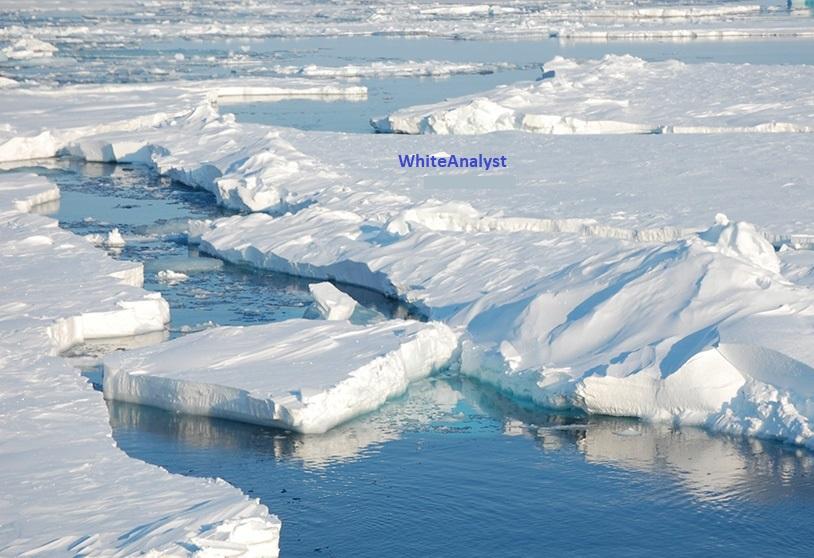
The Melting Arctic and Its Global Ripples
The Arctic, often referred to as Earth’s "refrigerator," is losing its icy grip due to accelerating climate change. A recent study published in Nature Communications has sounded the alarm: the Arctic could experience its first ice-free day as early as 2027.
This grim milestone, defined as less than one million square kilometers of sea ice coverage, signifies a tipping point in the Earth's climate system. It is more than just a loss of ice—it is a warning that the cascading effects of climate change are no longer distant possibilities but imminent realities. As the Arctic melts, the world faces an environmental, economic, and geopolitical crisis.
The Science: Why Is the Arctic Melting So Quickly?
The study by researchers Céline Heuzé and Alexandra Jahn draws on 11 advanced climate models and 366 simulations. Their findings reveal that the Arctic is losing sea ice at an unprecedented rate of 12.2% per decade—a trend unseen in at least 1,500 years.
1. Projected Timelines:
Even with aggressive reductions in greenhouse gas (GHG) emissions, the first ice-free Arctic day could arrive between 2027 and 2030. Without intervention, ice-free periods could extend to months by mid-century.
2. Triggers:
The Arctic’s vulnerability is exacerbated by unusually warm winters, spring storms, and feedback loops like the Albedo Effect, where the loss of reflective ice accelerates heat absorption. The rapidity of these changes underscores the inevitability of an ice-free Arctic, driven largely by human induced emissions.
Continue Reading
You've reached the member-only section. Login or create a free account to read the full article.
All Comments (0)
No comments yet
Be the first to start the discussion!